
- trackaffadmin
- 0 Comments
- 52 Views
Fix your data before you fix your bids. The single highest-leverage move to improve ROAS on Facebook is restoring accurate server-side conversion data through the Conversions API and tying real revenue back to each campaign.
TL;DR:
- Accurate server-side conversion data through the Conversions API is essential for improving Facebook ROAS, requiring thorough validation and integration.
- Blended ROAS, which includes off-platform revenue, provides a more realistic measure of campaign profitability than platform-reported ROAS.
- Creative testing, audience segmentation, and incremental scaling strategies are key to lowering CPM, increasing CTR, and avoiding budget resets.
- Fixing post-click landing page issues and verifying off-site conversions can significantly boost revenue per click and overall ROAS.
- Implementing verified off-site conversion tracking with solutions like TrackAff can increase ROAS by up to 70% by closing the attribution gap.
Table of Contents
- How Do You Improve ROAS on Facebook? Start With the Audit
- Why Does Blended ROAS Matter More Than Platform-Reported ROAS?
- What Creative Changes Actually Lower CPM and Raise CTR?
- How Do You Structure Audiences Without Bidding Against Yourself?
- How Many Conversions Do You Need Before Calling a Winner?
- What’s the Safe Way to Scale Budget Without Resetting Learning?
- Which Landing Page Fixes Increase Revenue Per Click Fastest?
- What Should You Monitor Daily to Catch ROAS Problems Early?
- Applied Example: What Server-Side Tracking Preserves in Practice
- An Editorial Note on Sequencing and Discipline
- A Practical Next Step for Fixing Your Conversion Data
- Sources
- FAQ
How Do You Improve ROAS on Facebook? Start With the Audit
Before touching a single bid or budget, audit whether Meta can actually see your conversions. Most ROAS problems trace back to broken or incomplete tracking, not bad creative or weak audiences. If the pixel is dropping events, or purchase values aren’t passing through, the algorithm is optimizing on guesswork. Shopify’s guidance on Meta ad optimization points to exactly this: moving off browser-only pixel data and integrating server-side Conversions API (CAPI) gives Meta direct, reliable conversion feedback instead of relying on a browser that ad blockers and iOS privacy settings routinely interfere with.
Run this pre-flight checklist before you touch anything else:
- Confirm the pixel fires correctly on every key page (view content, add to cart, purchase).
- Verify CAPI is live and sending server-side events, not just browser events.
- Check that dollar values are attached to purchase and lead events, not just event names.
- Set deduplication rules so pixel and CAPI events matching the same conversion don’t double-count.
- Cross-check Meta’s reported conversions against CRM or order data for the same date range.
Validating this takes three steps: pull server logs to confirm events are firing, use Meta’s Test Events tool inside Events Manager to watch data arrive in real time, and reconcile a week of CRM records against Meta’s reported conversions to spot the gap.
| Diagnostic Check | Tool | What a Failure Looks Like |
|---|---|---|
| Pixel firing | Meta Pixel Helper | No events logged on key pages |
| Server-side events | Meta Events Manager Test Events | CAPI events missing or delayed |
| Event Match Quality | Events Manager EMQ score | Low match score, poor optimization signal |
| Revenue accuracy | CRM vs. Ads Manager reconciliation | Conversion counts don’t match |
Fixing this usually means three concrete actions: turn on CAPI if it isn’t running, build a deduplication key (typically an order ID or event ID) so both pixel and server events map to one conversion, and wire up a CRM webhook so purchases, deposits, or bookings that happen off Facebook still get reported back. Higher Event Match Quality reduces data loss and gives the algorithm a cleaner signal to optimize toward.
Why Does Blended ROAS Matter More Than Platform-Reported ROAS?
Meta’s own reported ROAS and your actual business ROAS are rarely the same number, and the gap widens the more of your funnel happens off-platform. Blended ROAS divides total revenue recorded in your CRM or payment processor by total ad spend, regardless of what Meta claims it attributed. Platform-reported ROAS only counts what Meta’s model believes it caused, using its own attribution window, which is why insurance brokers, mortgage brokers, and other businesses with a sales cycle that closes days or weeks after the click often see far lower numbers in Ads Manager than what actually lands in the bank.
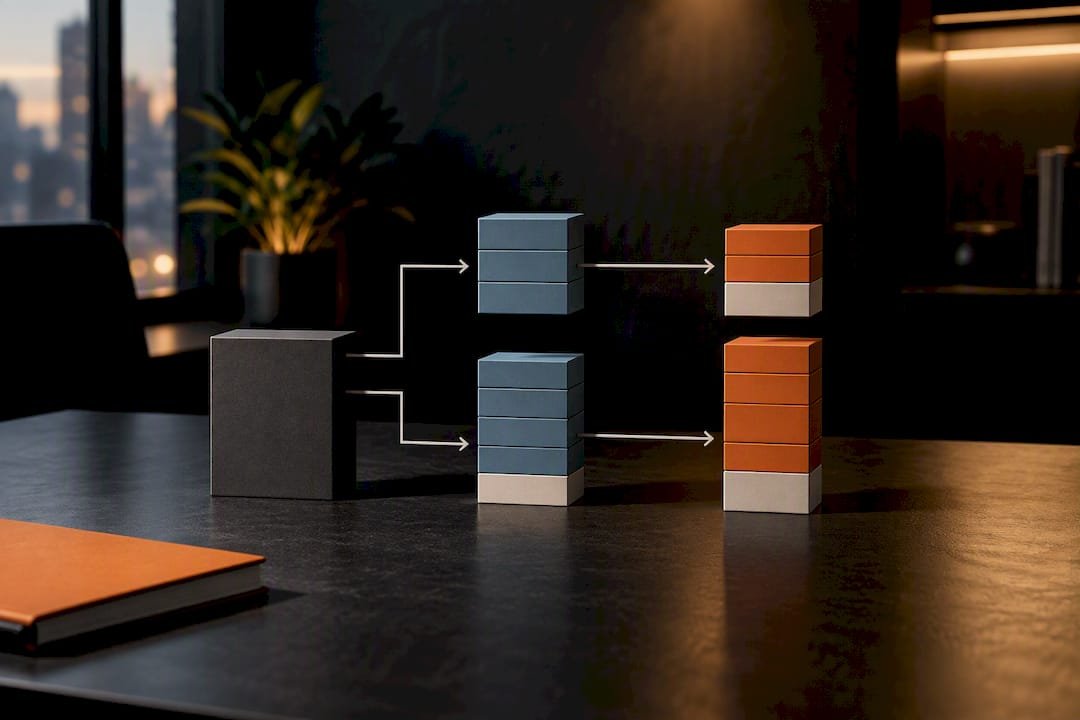
Use platform-reported ROAS for day-to-day optimization signals. Use blended ROAS for the real business decision: whether the campaign is profitable.
Piping revenue back into Meta requires three connections working together:
- Map purchase or deposit value into the CAPI value field so Meta receives the actual dollar amount, not just a binary conversion.
- Connect CRM webhooks so events that complete off-site (a phone sale, a signed contract, a funded deposit) still get reported.
- Standardize event mapping so a “purchase” in your CRM maps to the same event name and currency Meta expects.
Reconciliation is a recurring task, not a one-time fix. Deduplicate pixel and server events using a shared ID, align your CRM’s conversion window with Meta’s attribution window (typically 7-day click, 1-day view unless changed), and build one dashboard that both marketing and finance treat as the source of truth. Without that single dashboard, marketing keeps reporting one ROAS number while finance reports another, and neither side trusts the campaigns.
What Creative Changes Actually Lower CPM and Raise CTR?
Creative is the first lever to pull because it moves both sides of the ROAS equation at once. Higher click-through rate signals relevance to Meta’s ad auction, which tends to lower your cost per thousand impressions, and a lower CPM means more impressions and more conversion opportunities for the same budget. AdsGo’s analysis of Meta ad performance ties creative quality and refresh cadence directly to CPM and overall ROAS variance, which is why creative deserves attention before audience or bid changes.
Run these five tests before assuming your offer or audience is the problem:
- Swap the first three seconds of video creative. Hook quality determines whether someone watches second four.
- Test UGC-style, unpolished video against a produced, branded version. Cold audiences often respond better to the former.
- Rotate headlines while keeping the visual constant, isolating copy as the variable.
- Try a pattern-interrupt image or thumbnail that breaks the visual rhythm of a typical feed.
- Test static image against short-form video for the same offer, since format performance shifts by audience and season.
Hold each test for at least seven days before calling a result, since early-day volatility in the auction skews numbers. Rotate creative once frequency climbs past 2.5 on a cold audience, since that’s typically where fatigue sets in and CTR starts declining while CPM climbs.
Pro Tip: Build a rotating bank of at least four to six active creative variants per campaign. When one starts fatiguing, you already have a replacement tested and ready instead of scrambling to produce something new under pressure.
How Do You Structure Audiences Without Bidding Against Yourself?
Audience overlap quietly taxes your account by forcing your own ad sets to compete against each other in the same auction, which drives up CPMs without adding any net reach.
A workable budget split across the funnel looks like this for most accounts once you have baseline data:
- Roughly 50 to 60% of spend on cold, top-of-funnel prospecting to feed the pipeline.
- Roughly 25 to 30% on warm audiences (site visitors, engagers, video viewers) who haven’t converted yet.
- Roughly 15 to 20% on hot retargeting audiences, including cart abandoners and past customers.
Smaller budgets can’t always support three distinct tiers with enough volume to exit the learning phase in each, so consolidating warm and hot into a single retargeting campaign is often the more practical choice until spend grows.
Advantage+ Shopping Campaigns (ASC) work well when you want Meta’s automation handling audience selection and placement at scale, particularly once you have consistent conversion volume and don’t need granular creative-level testing. Manual campaign budget optimization, run through standard CBOs, still wins when you’re actively testing specific creative variants against each other and need clean, isolated data instead of Meta’s automated audience blending.
How Many Conversions Do You Need Before Calling a Winner?
Calling a test too early is one of the most expensive habits in Facebook advertising, because it leads to scaling a creative or audience that only looked good due to random early variance. The operational standard is to wait for at least 50 conversions per ad set before drawing conclusions, and to require a sustained ROAS advantage of 20% or more held for at least five consecutive days before declaring a winner, based on the threshold framework from Modern Marketing Institute.
Follow these test design rules to keep results clean:
- Isolate exactly one variable per test, whether that’s the hook, the headline, or the audience.
- Compare creatives against the same audience so performance differences reflect the creative, not who saw it.
- Set a minimum spend threshold per variant before evaluating, typically enough to generate at least 50 conversions.
- Avoid changing budgets mid-test, since that resets the learning signal and muddies the comparison.
Once you have a validated winner, keep testing and scaling separate:
- Run new creative or audience tests inside a dedicated CBO isolated from your scale campaigns.
- Leave scale campaigns untouched during active testing so their learning phase stays stable.
- Migrate winners into the scale campaign only after the 50-conversion, 5-day, 20%-lift bar is cleared.
This separation matters because 50 conversions per week is roughly the threshold most practitioners cite for an ad set to exit the learning phase and produce a stable signal Meta can actually optimize against.
What’s the Safe Way to Scale Budget Without Resetting Learning?
Scaling too fast is the single most common way advertisers destroy a campaign that was already working. Meta’s learning phase resets when the algorithm detects a major change, and a large budget jump qualifies. The practitioner standard, confirmed by Modern Marketing Institute’s guidance on exiting the learning phase, caps budget increases at 15 to 20% every three to four days.
Apply that rule alongside a bidding progression that matches your data maturity:
- Start new campaigns on Lowest Cost bidding while the algorithm is still learning your audience and creative response.
- Move to Cost Cap once performance stabilizes and you want a ceiling on cost per result without losing volume.
- Shift to Value Optimization with a Minimum ROAS floor once you have enough value-level conversion data flowing through CAPI to make the switch meaningful.
Meta’s own case study data shows Value Optimization lifting ROAS by 19% in one documented example, but that lever only works once purchase values are consistently and accurately reported. Switching to Value Optimization before your revenue data is clean just teaches the algorithm the wrong lesson faster.
Before making any bid strategy change, confirm two things: the ad set has sustained 50 or more conversions per week, and revenue values have been reporting consistently for at least two full weeks. Switching strategies on inconsistent data resets your progress more often than it improves it.
Which Landing Page Fixes Increase Revenue Per Click Fastest?
A campaign with excellent CTR and a broken checkout still produces a poor ROAS, because ROAS is ultimately a function of what happens after the click, not just the click itself. AdsGo’s framework for improving Meta ad ROAS identifies landing page alignment as one of the fastest, highest-leverage fixes available, often faster to implement than any creative or audience change.
Three drop points account for most of the lost conversions:
- Message mismatch: the ad promises one thing and the landing page opens with something else, causing an immediate bounce.
- Load speed over three seconds: every additional second of load time compounds abandonment, particularly on mobile.
- Checkout friction: too many form fields, forced account creation, or unclear pricing kill conversions right before the sale.
Once the page converts reliably, average order value (AOV) tactics increase revenue per click without spending another dollar on ads:
- Bundle complementary products or services at a modest discount to increase basket size.
- Add a single relevant upsell at checkout rather than several competing offers.
- Set a minimum spend threshold for free shipping or a bonus, positioned just above your current average order.
- Pre-qualify the offer in the ad copy itself, so only genuinely interested buyers click through.
Track the impact through three numbers: lift in conversion rate (CVR), revenue per click, and blended ROAS over a two-week window. A CVR improvement of even a few percentage points often moves ROAS more than a comparable increase in ad spend ever could.
Pro Tip: Test one funnel change at a time, the same way you test one creative variable at a time. Changing the checkout flow and the offer simultaneously makes it impossible to know which fix actually moved the number.
What Should You Monitor Daily to Catch ROAS Problems Early?
ROAS erosion rarely announces itself. It shows up first as small anomalies that compound over a week if nobody catches them. A minimal daily dashboard should track spend, revenue, blended ROAS, CPM, CTR, CVR, frequency, and conversion count broken out by ad set, so you can spot which specific line is drifting before the whole account suffers.
Watch for three specific warning signs:
- Frequency climbing past 2.5 to 3.0 on a cold audience, which signals fatigue is setting in.
- A sudden CPM jump with no corresponding change in budget, audience, or creative, which often points to increased competition or a delivery issue.
- Conversion counts diverging between your CRM and Meta’s reporting, which usually means a tracking or deduplication problem has crept back in.
Set automated alerts for each of these three triggers rather than relying on someone remembering to check manually. A frequency alert, a conversion-count-drop alert, and an Event Match Quality degradation alert catch most account problems within a day or two instead of a week, which is often the difference between a quick fix and a wasted budget.
Applied Example: What Server-Side Tracking Preserves in Practice
A branded post-click form placed inside the funnel, positioned after the ad click but before the sale completes, can capture purchase, deposit, or registration events and report them back to Meta through the Conversions API. This is the approach TrackAff takes: the form sits in the funnel, collects the actual off-site outcome, and feeds it back as a verified event tied to the original ad, preserving Event Match Quality along the way.
What this typically changes for marketers running the account:
- A cleaner conversion signal reaching Meta, since the event reflects a real buyer rather than an unverified lead.
- More accurate optimization toward people who actually pay, deposit, or register, not just people who filled out a form.
- Less wasted spend on audiences that generate clicks or leads but rarely convert into revenue.
TrackAff states that businesses using this approach have seen ROAS improve by up to 70%, a figure the company attributes to the gap between clicks and verified off-site outcomes finally being closed.
An Editorial Note on Sequencing and Discipline
The order matters more than any individual tactic here. Fix the signal first, test creative second, fix the post-click experience third, and only then scale budgets. Most advertisers reverse this. They scale a budget on unreliable data, blame the algorithm, and never look at their pixel setup. Automate the monitoring wherever you can, since freeing yourself from manual dashboard checks is what actually gives you room to think about strategy instead of firefighting.
— Terry
A Practical Next Step for Fixing Your Conversion Data
Most of the tactics above only work if Meta can see what actually happens after the click, and that’s precisely where most advertisers stay stuck. TrackAff closes that gap with a branded, white-label post-click form built into your funnel that captures purchases, deposits, and registrations, then reports them back to Meta through the Conversions API with deduplication already handled.
This matters most for performance marketers, agencies managing multiple client accounts, and any business whose sales close off Facebook, whether those are a mortgage broker’s signed applications or an insurance broker’s funded policies. Instead of optimizing toward leads and hoping they close, you optimize toward verified buyers from day one, which is the core advantage TrackAff builds around: reliably attributing off-site conversions so Meta learns from real outcomes instead of surface-level clicks. The platform is fully white-label for agencies and connects with major CRMs through webhook integration, so it drops into an existing funnel without rebuilding it.
Pricing details are available on the company’s official website, including several subscription tiers and custom enterprise options. Check the full pricing breakdown and start a free trial to see what your actual blended ROAS looks like once verified conversions start flowing back into Meta.
Sources
- How to optimize Facebook Ads (Shopify blog)
- How to exit the Meta ads learning phase fast and start scaling profitably in 2026 (Modern Marketing Institute)
- How to optimize Meta ads for higher ROAS (AdsGo)
FAQ
What Is the 3 2 2 Method for Facebook Ads?
The 3 2 2 method refers to a creative testing structure: three different hooks, two ad formats, and two audiences tested in combination to quickly find a winning angle.
Is $10 a Day Enough for Facebook Ads?
A very low daily budget can work for very narrow, local testing, but it rarely generates the volume needed to exit the learning phase quickly or reach the 50-conversion threshold that signals stable performance. Most advertisers need a higher daily spend to gather enough data for Meta’s algorithm to optimize reliably within a reasonable timeframe.
What’s a Good ROAS on Facebook Ads?
Rather than chasing a universal benchmark, calculate your break-even ROAS based on your own margin and cost structure and treat blended ROAS, not just platform-reported ROAS, as the number that reflects real profitability.
How Much Does 1,000 Views Cost on Facebook Ads?
Cost per thousand impressions (CPM) varies widely by industry, audience, season, and creative quality, so there’s no fixed universal number. Improving creative quality and CTR is the most direct lever advertisers have to lower CPM, since higher relevance in the auction tends to bring costs down regardless of the underlying market rate.
How Does TrackAff Help Improve ROAS on Facebook?
TrackAff captures off-site conversions like purchases, deposits, and registrations through a branded post-click form, then reports them back to Meta via the Conversions API. This gives Meta a verified signal to optimize toward actual buyers, and TrackAff attributes reported ROAS gains of up to 70% to that closed attribution gap, with current pricing available on its site.
Recommended
Your deals close off the pixel. Meta never finds out.
TrackAff reports your real conversions back to Meta the moment they happen, tied to the exact ad that produced them. 10-minute setup, no code.
Start free 14-day trial → Card required · No charge until day 14 · Cancel in one click